Monday, March 17, 2008

Releative Position and Privacy


Ed Felton recently wrote two posts on the failure of the marketability of privacy, and how corporations and consumers should respond. According to Felton:

There’s an obvious market failure here. If we postulate that at least some customers want to use web services that come with strong privacy commitments (and are willing to pay the appropriate premium for them), it’s hard to see how the market can provide what they want.
In the follow-up, Felton describes a standard contract and a sort of privacy escrow protocol to protect individuals against the desperate actions of a cratering start-up.

The more I read and think about privacy, the theory that an individual's privacy has a value that can be exchanged on the market becomes less and less compelling. Frank Pasquale wrote at Concurring Opinions that in the market model, you trade your privacy for efficiency and convenience, using Gmail as an example:
[C]onsider the type of suspicions that might result if you were applying to a new job and said "By the way, in addition to requiring 2 weeks of vacation a year, I need to keep my email confidential." The bargaining model is utterly inapt there. . . . just as it would have been for women to "bargain" for nondiscrimination policies, or mineworkers to bargain, one by one, for safety equipment.
He concludes that people who trade their privacy will outcompete those who do not, and that
"[a] collective commitment to privacy may be far more valuable than a private, transactional approach that all but guarantees a 'race to the bottom.' " The paper he cites on cost benefit analysis and relative position was interesting (to me at least) when read in terms of privacy. From the abstract:
When a regulation requires all workers to purchase additional safety, each worker gives up the same amount of other goods, so no worker experiences a decline in relative living standards. The upshot is that an individual will value an across-the-board increase in safety much more highly than an increase in safety that he alone purchases.
"Privacy" can be substituted for "safety." Can "security" also be considered in this context? Is it already?

Monday, March 3, 2008


From Rothman, an article at CSOnline discusses Moody's infosec risk rating service.

I personally dig this quote:


The idea for such an at-a-glance rating is appealing to risk executives such as Andre Gold, head of security and risk management for ING’s U.S. Financial Services business... Last year Gold oversaw reviews of 176 new technology vendors; his team visited sites as far away as South Africa to conduct security assessments. “It’s a service that we must do, but I think it’s a non-value-add service,” he says.
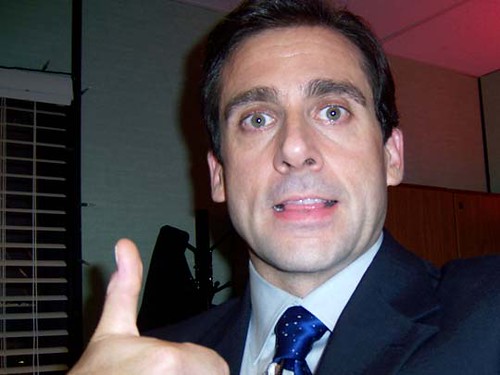
A non-value-add service? To quote Michael Scott, that's what she said.


photo from Dwight K. Schrute.

Wednesday, February 27, 2008

Now That's a Complaint.....

From Concurring Opinions (and elsewhere), a paper by Chris Hoofnagle "Measuring Identity Theft at Top Banks." Hoofnagle is asking the question: How does a consumer or regulator measure the incidence of identity theft from a financial institution? In an attempt to answer, Hoofnagle took the number of identity theft complaints collected by the FTC and matched them up with institutions listed on the complaint, with the intent of coming up with a score that could be used by consumers to judge how well the institution protects identity.

Call me crazy if I'm wrong, but Mr. Hofnagle seems to be pushing the data way beyond its utility.
Is a complaint to the FTC via a web form a reliable indicator of fraud controls at an institution? In my past experience as an investigator, I handled many cases of identity theft. I'd estimate that at least half, if not two thirds of the allegations of "identity theft" were not, in fact, identity theft. A suspicious charge on a bill, a bad skiptrace, or even a breach disclosure notice could result in complaint of "identity theft." Crime statistics that involve prosecutions of actual criminals may provide an underreported, but more reliable measure.

Hoofnagle mentions that he believes the number of FTC complaints may be low, due to historic underreporting of identity theft to criminal authorities. Again, according to my experience, which may be non-representative, I'd say that people will fill out a web form that belongs to the FTC sooner than they'd call the police. The FTC is more analogous to the Better Business Bureau than law enforcement.

I was going to write something about my frustration with the publicity that the FTC complaint statistics were receiving. Complaints are easy to count and a handy metric. But I don't think that they mean much without some evaluation of the validity of the complaint. That is, what is interesting is hard to find out.

Right before I read Hoofnagle's paper, I read this post from the Microsoft Security Development Lifecycle blog. The author makes the following statement regarding using vulnerability counts as a measure of software security:

"Measuring security is a real challenge, and while we may debate the
merits of vulnerability counts, right now it's the only concrete metric
we have."
I guess I'm saying that the only concrete metric one may have may be misleading, inaccurate, or irrelevant. Concrete isn't synonymous with valid. I may have issues with "metrics" but I love Metric. Need less, use less, we're asking for too much I guess, cause all we get is...

Wednesday, February 6, 2008

Fillings


Dental countdown:

4. Juicy stuff from re: The Auditors on SocGen.

Latest news out of France has Finance Minister Christine's Lagarde's report saying that in addition to controls being lax, (duh!), someone who understand the controls should have never been able to be a trader.
With all due respect to Ms. Lagarde, this is ridiculous. Just look at their annual report. They've got "controls" up the wazoo...This is a lame, puppy-dog, excuse.
It's the management, stupid!
Schweet.

3. On the local front, an unhappy IT laborer hacks into bosses e-mail, sends naughty messages.
The affidavit says that Das told Southerland he was holding the Web site hostage until he received his paycheck. Though Southerland said that checks weren’t being dispersed until the following week, Das hacked into Southerland’s e-mail account and sent e-mails to Southerland’s clients and family defaming the company, according to the affidavit.
One of the hostage servers was a database for a site called Rotten Neighbors, where you can be a neighborhood fussbudget without putting on your slippers and yelling at passing cars in your driveway. Such an operation may not provide a gruntle-rich environment that would provide the last paycheck patience that is in such short supply nowadays.

2. And if we learned anything from SocGen, we learned that misbehaving employees are not always motivated by greed, as local community radio KOOP learned recently as they were arsonized. Like French bankers, they were SHOCKED that a buzz kill playlist would lead to wanton destruction of assets.

1. From toohotfortnr, this article identifies scooters as weapons of insurgency. Have we learned nothing?

Friday, February 1, 2008

He begged me to follow but legions of sorrow defied me

I may not be sure what my point is. Black Swans with trading accounts? The letter U and the numeral Two? Or that it actually does take two ringy-dingys. I only know that the following illustrates it in the most vivid fashion possible.


Sunday, January 27, 2008

Data Privacy Day


To appropriately observe Data Privacy Day, I will not ask you how it is hanging.
That is strictly a matter between you and whatever hangs off you.


Photo of sloth having its privacy violated from sfPhotocraft.

Thursday, January 24, 2008

Segregation of Obscurity


From Forbes account of the Societe Generale billion dollar fraud:

"It's Nick Leeson, the story is exactly the same," said Celent's Pierron. "We have a trader who trades futures, or derivatives, who hides his losses by using weaknesses in the risk-management system." He said that as long as traders had knowledge of back-office operations, the risks of
abuse would always be there.

A spokesperson for Societe Generale said that there would be thorough reviews of internal controls, but noted that this particular case of fraud was "very, very sophisticated."
So, segregate controls, but keep them obscure.